Friday, April 23, 2010

Sunday, April 18, 2010
LATE VICTORIAN HOLOCAUSTS BY MIKE DAVIS

BOOK REVIEW
Critics of globalization point out with some justice that poor people around the world suffer far more than the citizens of industrialized nations during downturns in the global economy. Peasants in developing countries can find their lives hanging in the balance during a rise in food prices or a decline in the global market value of the goods they produce. Never was this more true than during the hey-day of the European imperialism in the last three decades of the nineteenth century. Aggressive trade practices and the ruthless use of military force effectively subdued nations in Asia, Africa, and South America and brought these countries into a global trade system. By the 1870s, and certainly by the turn of the century, many European countries, above all Great Britain, had created the world's first global market economy. Financial markets in London, Paris, Amsterdam, and elsewhere were linked by telegraph to places where raw materials were produced for European consumption, while established trade routes were patrolled by European navies (particularly the Royal Navy). The economic power of the extensive British Empire was unparalleled and the inner workings of the global system dominated by London determined the fate of innumerable people around the world.
It is with the workings of the British economic system and their impact on indigenous populations in India, China, and elsewhere that Mike Davis' book Late Victorian Holocausts is concerned. Davis' point of departure is a simple question. Why is it that widespread hunger in Western Europe disappeared in the nineteenth century while famine and disease raged throughout multiple places in what we would call today the "Third World"? Davis provides a simple answer: European imperialism (especially British imperialism) created a global economic system through which the food and wealth of conquered nations (i.e. colonies) was siphoned off for the benefit of wealthy and powerful Europeans, while those in the colonies were left to starve and die. The result was mass death (what Davis calls "holocausts") on an unprecedented scale in India, China, Brazil and other places, that was most intense during the El Niño drought years of 1876-77 and 1888-1902.
This imperial global economic system was certainly not a "free" market in any sense of the word. It was in fact bolstered by a long series of tariffs and unfavorable trade relationships that were forced by Europeans upon the peoples they conquered. Colonies were in turn subjected to economic pressure dictated by and manipulated from financial centers in Western Europe. It was these economic forces, as well as brutal gunboat diplomacy, that Davis argues created the Third World as we know it today.
THE "FREE MARKET" AS A MECHANISM OF MASS MURDER
Davis' primary focus in fleshing out his story is the crown jewel of Britain's colonial empire: India. Drought was the precipitating cause of the hardship faced by the Indian people. However, Davis demonstrates with statistics and anecdotes that it was the unregulated "free market" system imposed on India by Britain that led to the deaths of tens of millions in the mid-1870s and late 1880s.
How did death and human suffering on such a massive scale happen? Following the English conquest of India in the early nineteenth century, economic relationships in the sub-continent underwent revolutionary changes. Thousands of miles of railroad track were laid. Telegraph wire was strung between outlying areas and the capitol city of Bombay (Mumbai today). Central grain collection depots were created and Indian grain was exported in massive quantities to the British Isles. Also, Indian subsistence farmers were gradually forced out in favor of large land enclosures. Within these new enclosures cash crops like cotton were planted, which supplied the textile mills of Lancashire, but which could not feed the Indian peasants who farmed the land. Finally, the tax burden upon the Indian peasantry was increased exorbitantly to pay for these "improvements". British authorities needed the revenue to finance war in neighboring Afghanistan.
The innovations imposed by the British on India re-directed the trajectory of Indian commerce and especially food production toward Great Britain and away from the local village markets where the food was needed. Rail lines and the adjacent grain depots enabled British authorities to stockpile grain and keep it under guard away from the people who needed it most, while telegraph lines dictated the price of grain on world commodities markets to local producers. When grain prices rose across the board in global trading, peasants could not afford to buy food.
In the face of these crippling economic forces, British colonial authorities did nothing, primarily because they would not "tamper" with the operation of the liberal "free" market that Britain had created. The Viceroy of India during the famine years of the 1870s was Lord Lytton, a mentally unbalanced English noble. Davis recounts that in the midst of widespread famine and the deaths of millions all around him, Lytton maintained a strict laissez-faire attitude toward famine relief. As Lytton wrote at the time, "there is to be no interference of any kind on the part of the Government with the object of reducing the price of food," a policy proposal Lytton termed "humanitarian hysterics" and "cheap sentiment". (p. 31)
Lytton and his fellow administrators preferred instead to blame the "laziness" of famine victims themselves for causing their own dire fate. Citing Lord Temple, "Nor will; many be inclined to grieve much for the fate which they brought upon themselves, and which terminated lives of idleness and too often of crime". (p. 41) The task of saving life, therefore, was "beyond our power to undertake," claimed Temple and Lytton, and it was "a mistake to spend so much money to save a lot of black fellows". (p. 37)
British officials were thus completely unwilling to intervene in the operation of the "free" market despite seeing death on a massive scale all around them. Overall at least 7.1 million people, and perhaps as many as 10.3 million people, died during the famine years of 1876-1878. (p. 111) Furthermore, despite death on this scale and falling production caused by drought, British officials in India still managed to export 6.4 million cwt. of wheat to Great Britain. (p. 31)
LIFE AND DEATH FOLLOWS THE MARKET CYCLE
The years following 1879 were a time when the world market continued to expand. Monsoonal rains settled back into a normal pattern and grain production around the world rose considerably. These were also years when Britain and other colonial powers expanded their reach into the interior of the subjugated countries they held. In India, even more land is brought under cultivation. These lands are then connected to the market by expanded telegraph and rail lines. Then in 1888-89 and 1891-92, the bottom again fell out of the system as El Niño drought gripped the temperate regions of Asia once more.
The resulting death from famine and disease, caused by the very same factors operating in India and elsewhere in the 1870s, was unfathomably huge. By 1902 in India alone between 12.2 and 29.3 million people perished. In China, where the British, Americans, and other European powers controlled practically all trade using military force, between 19.5 and 30 million people died. In Brazil another 2 million perished over the same time span. (p. 7).
THE "FREE" MARKET AND THE MAKING OF THE THIRD WORLD
Mike Davis demonstrates beyond a doubt that the economic structure of exploitative globalization is not a new phenomenon in the world. The lives of millions of people who formerly had survived in localized economies based on subsistence farming were wiped out "in the process of being forcibly incorporated" into the modern world system. (p. 9) Davis reminds us that markets are never free and they never operate according to "iron laws" of economics. Rather, markets are created and often the power underpinning their operation is fiscal manipulation and simple brute force.
Great Britain's global imperial economy was a case in point. It was never a "free" market. England imposed unfavorable trade terms and high tariff walls on India, China and on all of the other countries in its empire. Local economies forced open by the British were sucked dry of their vital raw materials and in return peasants were forced to buy expensive British manufactured goods. This practice was put into place throughout the colonial world by France, Portugal, Spain, Germany and other colonial powers. If anything, the economies of European colonies were more captive markets than free markets.
The latter point is perhaps the most important conclusion of Late Victorian Holocausts; specifically, that what we call the Third World today was a product of European and, to a lesser extent, American economic exploitation. The incorporation of formerly powerful countries like China and India into the global economy by Great Britain and others effectively destroyed indigenous production. Contrary to conventional wisdom, until around 1850, India and China had actually held their own against Europeans when it came to industrial production. The localized production of wealth and industry, however, was halted and then reversed by the imposition of the global economic system. It is for this reason, Davis concludes, that India's per capita income did not increase between 1757 and 1947; and in fact declined by more than 50% between 1850 and 1900. (p. 311).
Critics of globalization point out with some justice that poor people around the world suffer far more than the citizens of industrialized nations during downturns in the global economy. Peasants in developing countries can find their lives hanging in the balance during a rise in food prices or a decline in the global market value of the goods they produce. Never was this more true than during the hey-day of the European imperialism in the last three decades of the nineteenth century. Aggressive trade practices and the ruthless use of military force effectively subdued nations in Asia, Africa, and South America and brought these countries into a global trade system. By the 1870s, and certainly by the turn of the century, many European countries, above all Great Britain, had created the world's first global market economy. Financial markets in London, Paris, Amsterdam, and elsewhere were linked by telegraph to places where raw materials were produced for European consumption, while established trade routes were patrolled by European navies (particularly the Royal Navy). The economic power of the extensive British Empire was unparalleled and the inner workings of the global system dominated by London determined the fate of innumerable people around the world.
It is with the workings of the British economic system and their impact on indigenous populations in India, China, and elsewhere that Mike Davis' book Late Victorian Holocausts is concerned. Davis' point of departure is a simple question. Why is it that widespread hunger in Western Europe disappeared in the nineteenth century while famine and disease raged throughout multiple places in what we would call today the "Third World"? Davis provides a simple answer: European imperialism (especially British imperialism) created a global economic system through which the food and wealth of conquered nations (i.e. colonies) was siphoned off for the benefit of wealthy and powerful Europeans, while those in the colonies were left to starve and die. The result was mass death (what Davis calls "holocausts") on an unprecedented scale in India, China, Brazil and other places, that was most intense during the El Niño drought years of 1876-77 and 1888-1902.
This imperial global economic system was certainly not a "free" market in any sense of the word. It was in fact bolstered by a long series of tariffs and unfavorable trade relationships that were forced by Europeans upon the peoples they conquered. Colonies were in turn subjected to economic pressure dictated by and manipulated from financial centers in Western Europe. It was these economic forces, as well as brutal gunboat diplomacy, that Davis argues created the Third World as we know it today.
THE "FREE MARKET" AS A MECHANISM OF MASS MURDER
Davis' primary focus in fleshing out his story is the crown jewel of Britain's colonial empire: India. Drought was the precipitating cause of the hardship faced by the Indian people. However, Davis demonstrates with statistics and anecdotes that it was the unregulated "free market" system imposed on India by Britain that led to the deaths of tens of millions in the mid-1870s and late 1880s.
How did death and human suffering on such a massive scale happen? Following the English conquest of India in the early nineteenth century, economic relationships in the sub-continent underwent revolutionary changes. Thousands of miles of railroad track were laid. Telegraph wire was strung between outlying areas and the capitol city of Bombay (Mumbai today). Central grain collection depots were created and Indian grain was exported in massive quantities to the British Isles. Also, Indian subsistence farmers were gradually forced out in favor of large land enclosures. Within these new enclosures cash crops like cotton were planted, which supplied the textile mills of Lancashire, but which could not feed the Indian peasants who farmed the land. Finally, the tax burden upon the Indian peasantry was increased exorbitantly to pay for these "improvements". British authorities needed the revenue to finance war in neighboring Afghanistan.
The innovations imposed by the British on India re-directed the trajectory of Indian commerce and especially food production toward Great Britain and away from the local village markets where the food was needed. Rail lines and the adjacent grain depots enabled British authorities to stockpile grain and keep it under guard away from the people who needed it most, while telegraph lines dictated the price of grain on world commodities markets to local producers. When grain prices rose across the board in global trading, peasants could not afford to buy food.
In the face of these crippling economic forces, British colonial authorities did nothing, primarily because they would not "tamper" with the operation of the liberal "free" market that Britain had created. The Viceroy of India during the famine years of the 1870s was Lord Lytton, a mentally unbalanced English noble. Davis recounts that in the midst of widespread famine and the deaths of millions all around him, Lytton maintained a strict laissez-faire attitude toward famine relief. As Lytton wrote at the time, "there is to be no interference of any kind on the part of the Government with the object of reducing the price of food," a policy proposal Lytton termed "humanitarian hysterics" and "cheap sentiment". (p. 31)
Lytton and his fellow administrators preferred instead to blame the "laziness" of famine victims themselves for causing their own dire fate. Citing Lord Temple, "Nor will; many be inclined to grieve much for the fate which they brought upon themselves, and which terminated lives of idleness and too often of crime". (p. 41) The task of saving life, therefore, was "beyond our power to undertake," claimed Temple and Lytton, and it was "a mistake to spend so much money to save a lot of black fellows". (p. 37)
British officials were thus completely unwilling to intervene in the operation of the "free" market despite seeing death on a massive scale all around them. Overall at least 7.1 million people, and perhaps as many as 10.3 million people, died during the famine years of 1876-1878. (p. 111) Furthermore, despite death on this scale and falling production caused by drought, British officials in India still managed to export 6.4 million cwt. of wheat to Great Britain. (p. 31)
LIFE AND DEATH FOLLOWS THE MARKET CYCLE
The years following 1879 were a time when the world market continued to expand. Monsoonal rains settled back into a normal pattern and grain production around the world rose considerably. These were also years when Britain and other colonial powers expanded their reach into the interior of the subjugated countries they held. In India, even more land is brought under cultivation. These lands are then connected to the market by expanded telegraph and rail lines. Then in 1888-89 and 1891-92, the bottom again fell out of the system as El Niño drought gripped the temperate regions of Asia once more.
The resulting death from famine and disease, caused by the very same factors operating in India and elsewhere in the 1870s, was unfathomably huge. By 1902 in India alone between 12.2 and 29.3 million people perished. In China, where the British, Americans, and other European powers controlled practically all trade using military force, between 19.5 and 30 million people died. In Brazil another 2 million perished over the same time span. (p. 7).
THE "FREE" MARKET AND THE MAKING OF THE THIRD WORLD
Mike Davis demonstrates beyond a doubt that the economic structure of exploitative globalization is not a new phenomenon in the world. The lives of millions of people who formerly had survived in localized economies based on subsistence farming were wiped out "in the process of being forcibly incorporated" into the modern world system. (p. 9) Davis reminds us that markets are never free and they never operate according to "iron laws" of economics. Rather, markets are created and often the power underpinning their operation is fiscal manipulation and simple brute force.
Great Britain's global imperial economy was a case in point. It was never a "free" market. England imposed unfavorable trade terms and high tariff walls on India, China and on all of the other countries in its empire. Local economies forced open by the British were sucked dry of their vital raw materials and in return peasants were forced to buy expensive British manufactured goods. This practice was put into place throughout the colonial world by France, Portugal, Spain, Germany and other colonial powers. If anything, the economies of European colonies were more captive markets than free markets.
The latter point is perhaps the most important conclusion of Late Victorian Holocausts; specifically, that what we call the Third World today was a product of European and, to a lesser extent, American economic exploitation. The incorporation of formerly powerful countries like China and India into the global economy by Great Britain and others effectively destroyed indigenous production. Contrary to conventional wisdom, until around 1850, India and China had actually held their own against Europeans when it came to industrial production. The localized production of wealth and industry, however, was halted and then reversed by the imposition of the global economic system. It is for this reason, Davis concludes, that India's per capita income did not increase between 1757 and 1947; and in fact declined by more than 50% between 1850 and 1900. (p. 311).
Friday, April 16, 2010
Icelandic Economy - historic effects and final wishes

The eruption of an Icelandic volcano disrupted air traffic all over Europe. In 1783, a similar catastrophe killed thousands of people across the continent.
By Dirk Vandenberghe
For article press here:
http://www.nrc.nl/international/article2526154.ece/Historic_eruption_on_Iceland_killed_thousands
Latest News :
The late Icelandic economy's dying wish was to have its ashes scattered over Europe!
Thursday, April 15, 2010
Monday, April 12, 2010
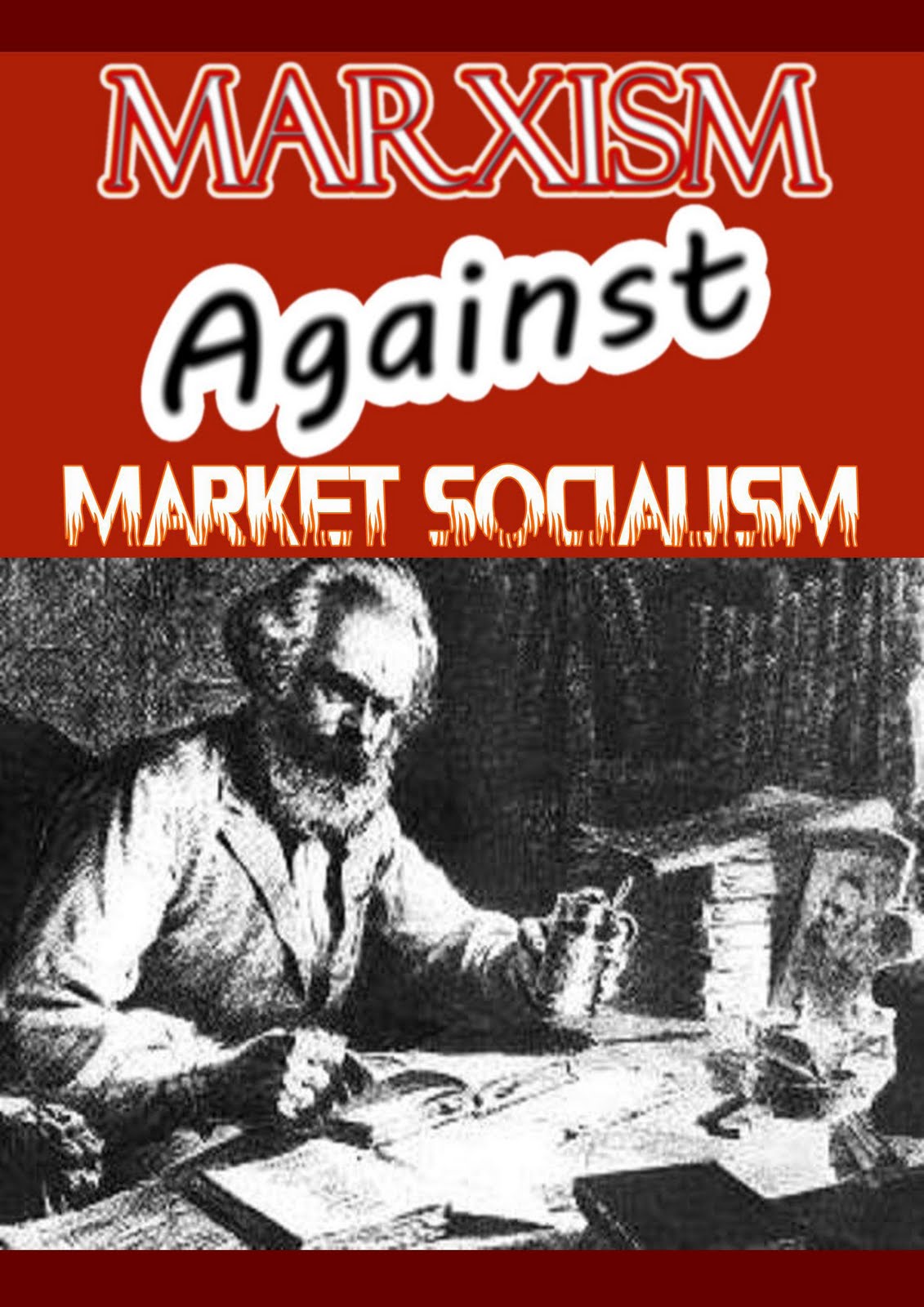
Marxism against Market Socialism published by Democracy and Class Struggle

Marxism against Market Socialism addresses the contributions of Marx,Engels,Lenin, Stalin and Mao in combating market socialism and the relevance of their struggle for the 21st Century.
The book critically examines late 20th century developments in China with essays from Wu Bing, Han Deqiang, Apo Leong,Gong Xiantian
The book will contribute to the clarification of the political economy of Socialism which revisionism confused with the political economy of Capitalism in the 20th Century
MARXISM AGAINST MARKET SOCIALISM
Contents:
Introduction
Part-1 Hodgkins and Thompson
Part-2 John Gray
Part-3 Proudhon
Part-4 Duhring
Part-5 Lenin
Part-6 Lange
Part-7 Voznesenky
Part-8 Stalin
Part-9 Kantrovitch
Part-10 Debate Between Yang Chien-pai and Tsai Chien-hua
Part-11 Mao on the Law of Value
Part-12 Origin of Deng's Reform
Part-13 The Contortion of Marxism
Part-14 Han Deqiang
Part-15 Gong Xiantian
Part-16 The Chinese State & Economy
70 Pages - Price 7 pounds
Where to buy this book
Available at Housemans - London telephone orders contact the shop by phone (020 7837 4473), or e-mail orders@housmans.com.
Bulk Orders of more than 5 copies available from nickglais@yahoo.co.uk
Available at Bookmarks Socialist Bookshop in London 020 7637 1848
enquiries@bookmarks.uk.com
Buy online at :
http://www.alternativebookshop.com/BookDetails.php?bookid=1590

Sunday, April 4, 2010
Ireland - This is Criticial Because This is Class War

The proponents of capitalism never tired of telling us how it is not the state’s role to interfere in the ‘free market’ – that economic competition between private producers and investors is key to economic growth.
They never tired of telling us that incentives, in the form of profits, were essential to convincing ‘bold entrepreneurs’ to take investment ‘risks’. They never tired of telling us that this was the only way to successfully generate rising levels of economic growth and wealth that would, ultimately, it was argued, trickle down and benefit all of society. Nor did they ever tire of telling us that, if these investors happened to make bad investment decisions, then they alone would face the consequences; it was only fair that, in the same way as they were handsomely rewarded for the successful risks they were taking, so too should they suffer the losses when their investments failed. That is some of the logic of capitalism. So the theory went anyway.
On Tuesday [March 30], the Twenty Six County minister of finance Brian Lenihan exploded that particular set of myths with the announcement in Leinster House, that, far from the people being sovereign, they would, in effect, be paying the debts of private banks for decades to come. By his actions, Brian Lenihan has confirmed the contempt in which the political establishment holds the very people who elect them.
The detail of the further bail-out of the banking system is truly staggering in its scale: a total of €21 billion [£18.7 billion] to rescue a failed and corrupt system.
Of this total, €8.3 billion [£7.4 billion] will be pumped into Anglo-Irish Bank, for so long the play-thing of the Twenty-Six County state’s biggest property developers. It doesn’t end there either, as Lenihan announced that a further €10 billion [£8.9 billion] will be required for AIB alone. Prior to Tuesday’s announcement, AIB had already received €4 billion [£3.6 billion] of taxpayers’ money. To put this €21 billion in context, the combined health budget and education budget in the year that the bank guarantee scheme was agreed was €23 billion [£20.4 billion].
The consequences of this decision will be felt for a long, long time; the mass of people face unemployment, reduced public services and chronic levels of debt for generations to come.
The right of the people to quality healthcare, housing and education is being made subordinate to the interest of banks, speculators and developers. Workers pension rights are being sold off so that the fat-cats that bankrolled Fianna Fáil for decades can be saved.
On Tuesday, many of these property developers, almost all of whom regularly attended the Fianna Fáil fundraising tent at the Galway races during the so called boom years, had their loans transferred into NAMA. Among them were Liam Carroll, Bernard McNamara, Seán Mulryan and Johnny Ronan, the playboys of the Celtic Tiger, lauded by the corporate media as the men who were taking the big risks to build a thriving economy. These parasites, facilitated by their political wing in Fianna Fáíl, simply inflated the property bubble, forcing thousands of households to take out 100 per cent mortgages on homes that were incredibly over-valued. These householders are now expected to pick up the tab for this gambling greed.
The consequences of the bank guarantee scheme of September 2008; a scheme that Fianna Fáil, Fine Gael, the Green Party and Sinn Féin all supported, is now painfully evident. Secret meetings between senior bankers and Dublin government ministers thrashed out a deal that was foisted upon an unsuspecting public. The loans and deposits of all banks were guaranteed on that September night in 2008 with little detail provided as to the exact state of the banks’ loan books. Any semblance of democracy has been truly torn to shreds and all that is offered is the tired Thatcherite mantra, ‘There is no alternative’.
No alternative, it seems, to bailing out the rich and powerful in Irish society with billions of euro of taxpayers’ money, while workers who actually created the wealth are consigned to the dole queues. With high rates of unemployment, bosses are using the recession to try and force down the pay and working conditions of those still in work. The deal agreed between ICTU negotiators and the Dublin government this week represents yet another shameful sell-out of public sector workers. It is utterly astonishing that union bosses are agreeing to a four year pay freeze and cuts in overtime for public sector workers while tens of billions is being spent bailing out the banks. The privatisation of sections of the public sector will follow unless workers demand that enough is enough.
This system has never been so clearly exposed as the fetter on human development it is as it was after Lenihan’s announcement. War has been declared on workers who are being treated once again as mere cogs in a profit-producing machine. That these egregious amounts of bailout funds can be made available now to rescue the capitalist banking system gives the lie to the notion that there is not enough money in society to take care of the totality of the social needs of people.
It is a lie that this type of society serves the needs of anyone but a small minority. We, the working people, need to take as our starting point in our understanding of this the fact that it is the working class alone who are the creators of wealth and that it is only through exploitation that wealth passes out of their control into that of the capitalist. Most importantly, we need to understand that this bank bailout presents stark and condemning proof, if ever more proof were needed, of the fact that, in this type of society, there is an irresolvable conflict between the interests of the capitalist class and those of the working class.
The task for socialists and republicans now is to find ways of highlighting this reality to the working and unemployed people that are the victims of capitalism. For it is only through effectively agitating and organising among our people that we will have a fighting chance of ever building the forces required for this economic system to be pulled off its hinges and a new, socialist one, built in its stead.
This is a critical task because this is class war
First published on
http://www.eirigi.org/
Thursday, April 1, 2010
Dumenil - Crisis of Neo Liberalism
Duménil: Neoliberal trends setting up a terrible future of inequality and exploitation for the workers
Saturday, March 20, 2010
Coming Soon - Marxism against Market Socialism - A book from Democracy and Class Struggle
Marxism against Market Socialism addresses the contributions of Marx,Engels,Lenin, Stalin and Mao in combating market socialism and the relevance of their struggle for the 21st Century.
The book critically examines late 20th century developments in China with essays from Wu Bing, Han Deqiang, Apo Leong,Gong Xiantian
The book will contribute to the clarification of the political economy of Socialism which revisonism confused with the political economy of Capitalism in the 20th Century
Monday, March 1, 2010

Subscribe to:
Posts (Atom)