
Saturday, December 14, 2013
Thursday, November 28, 2013
Iceland - Hot Money and Cross Border Finance
Treacherous future still ahead? A look into why the Icelandic government imposed controls over movement of international funds across its borders & its current negotiations to lift those capital controls
Wednesday, November 27, 2013
US Corporations Enlist Ex Intelligence Agents to spy on Non-profits
A new report details how corporations are increasingly spying on nonprofit groups they regard as potential threats.
The corporate watchdog organization Essential Information found a diverse groups of nonprofits have been targeted with espionage, including environmental, antiwar, public interest, consumer safety, pesticide reform, gun control, social justice, animal rights and arms control groups.
The corporations carrying out the spying include the U.S. Chamber of Commerce, Wal-Mart, Monsanto, Bank of America, Dow Chemical, Kraft, Coca-Cola, Chevron, Burger King, McDonald's, Shell, BP, and others. According to the report, these corporations employ former CIA, National Security Agency and FBI agents to engage in private surveillance work, which is often illegal in nature but rarely -- if ever -- prosecuted.
Gary Ruskin, author of the report, "Spooky Business: Corporate Espionage Against Nonprofit Organizations," and director of the Center for Corporate Policy, a project of Essential Information.
Friday, November 22, 2013
Poor Countries and Civil Society Walk Out of COP 19 Over Inaction over Climage Change
Patrick Bond: Developing countries and green groups must evaluate if walkouts are the best way to get rich countries to address climate change
Thursday, November 14, 2013
TPP Exposed: WikiLeaks Publishes Secret Trade Text to Rewrite Copyright Laws, Limit Internet Freedom
Political Economy Research says get past the CATO crap in the first few minutes and listen to Lori Wallach and think about what she is saying.
If you do not know anything about TPP watch the video at the bottom of this text first and the top video last.
WikiLeaks has published the secret text to part of the biggest U.S. trade deal in history, the Trans-Pacific Partnership (TPP).
For the past several years, the United States and 12 Pacific Rim nations have been negotiating behind closed doors on the sweeping agreement.
A 95-page draft of a TPP chapter released by WikiLeaks on Wednesday details agreements relating to patents, copyright, trademarks and industrial design -- showing their wide-reaching implications for internet services, civil liberties, publishing rights,and medicine accessibility.
Critics say the deal could rewrite U.S. laws on intellectual property rights, product safety and environmental regulations, while backers say it will help create jobs and boost the economy.
President Obama and U.S. trade representative Michael Froman reportedly wish to finalize the TPP by the end of the year and are pushing Congress to expedite legislation that grants the president something called "fast-track authority."
However, this week some 151 House Democrats and 23 Republicans wrote letters to the administration saying they are unwilling to give the president free reign to "diplomatically legislate."
We host a debate on the TPP between Bill Watson, a trade policy analyst at the Cato Institute, and Lori Wallach, director of Public Citizen's Global Trade Watch.
For a long time now there has been concern about the Trans Pacific Partnership Agreement and what it might mean for intellectual property laws and online rights but little is known about the negotiations for the treaty because talks are being held in secret.
However, WikiLeaks managed to obtain and release the chapter of the agreement concerning IP and people who've been following the talks are more worried than ever.
We spoke to journalist, writer and author of Rebel Code, Glyn Moody about just what the TPP is and the potential consequences of it being signed
Monday, November 11, 2013
EU- US TAFTA Trade Deal - Corporations above Nations
Political Economy Research says TAFTA is for the Atlantic has TPP is for the Pacific and both trade agreements if they can be called that put corporations above nations which is especially why the US is so eager to impose TPP on Pacific Rim and TAFTA on Europe.
TAFTA just like TPP gets very little media coverage because only knowing about it will create opposition to it - basically you have to be daft to support TAFTA and has the Pacific Rim is discovering mad to support TPP.
They hope to keep us ignorant while they do deals behind closed doors.
See Also:
http://democracyandclassstruggle.blogspot.co.uk/2013/03/everyone-but-china-agreement-prevents.html
Also watch Max Keiser for how angry we should be with TAFTA and TPP
Tuesday, October 29, 2013
The Green Economy and China's Economic Development - No to failed Green Market Economy
Dr Ying Kong is the founding Dean at the Tsinghua (Qianhai) International Business School is a Tsinghua Professor promoting the bankrupt idea of Carbon Trading in China and Green Market Economy - Tsinghua University is the ideological centre of free market fundamentalism in China has we have recently noted.
See videos below for shortcomings of carbon trading another idea from Goldman Sachs so popular at Tsinghua University and from Patrick Bond on failure of Green Market Economy.
For further reading visit here:
http://democracyandclassstruggle.blogspot.co.uk/2009/12/cap-and-trade-critical-look.html
http://democracyandclassstruggle.blogspot.co.uk/2013/10/should-china-liberalize-its-economy.html
http://democracyandclasstruggle.blogspot.co.uk/2012/06/green-market-economy-failure-rio20.html
Friday, October 25, 2013
Manufacturing Imperialism :The Political Economy of Special Economic Zones by Rona Wilson
Political Economy Research has recently been sent this work of Rona Wilson and we are pleased to publish it has it address's some fundamental questions about displacement and development in India.
The article is longer than what we normally publish but the effort in seriously studying this document will be repaid with deepened knowledge of Indian reality.
The country that is more developed industrially only shows, to the less developed, the image of its own future
--Marx, Capital, Vol I
An epitome of beauty, serenity and colonial charm…
--An advertisement for The Carlton, a luxury hotel created by the Rahejas in Kodaikanal, Tamil Nadu
Introduction
Land, development and displacement has once again become the central point of debate in India. Curiously the debate is on industrial development ostensibly, under capitalism. Suddenly it has dawned upon the learned Prime Minister Manmohan Singh and his policy experts that land and agriculture cannot be the main basis for the economy of a country like India that is marching ahead in the 21st century. The often erudite, soft spoken PM has even gone to the extent of calling all those, who oppose the present road map of prosperity and growth laid out by his government, anti-development and hence anti-national. The Prime Minister has equated the present policy prescription for growth tempered by the diktats of the World Bank and IMF with the ‘national interest’. Dr. Manmohan Singh is not alone in his concern about the future of the so-called ‘second generation reforms’, otherwise known as Liberalisation, Privatisation and Globalisation (LPG).
He is joined by the likes of Dr. Amartya Sen who is always ready to ‘grade’ the ‘performance’ of the Indian economy. In one of his interviews to The Telegraph while trying hard to pull the CPM-led West Bengal government out of the ignominy of Nandigram and Singur the Nobel Laureate has made it loud and clear that whatever is happening in the form of Special Economic Zones throughout the sub-continent is development through industrialisation that India badly needs. And make no mistake. This development package will inevitably have to exploit land that was / is fertile or otherwise. Gone are the days when agriculture alone could provide to the developmental needs of the Indian economy which as per Sen the economist is poised for a growth of more than 9 percent, mainly propelled through foreign direct investments. At best, it is nothing but Sen and the art of consensus building. Incidentally, when the people of Singur was protesting against land being taken from them against their will, Telegraph had carried photographs of CPM cadre moving in hordes on motorcycles in Singur with red flag and the life size portrait of Ratan Tata trying to ‘educate’ the people about the virtues of the TATAs as the harbinger of industrialization in post-47 India. Perhaps both, the Nobel laureate and the lumpen brigade of the CPM, were conveying the same, albeit, in different ways.
It’s official now. Agriculture cannot be the main provider of employment for the vast sections of the masses abounding rural India. In fact, the first official warning came in the form of an innocuous survey of the NSSO—about which the government had made a song and dance, not to mention the media that had gone overboard—proclaiming that about 40 percent or more of the peasantry in India would want to rid their lives of agriculture.
Yet in the maze of this publicity blitzkrieg by the proponents of LPG, what is carefully ignored is the question of development itself. The question as usual is deliberately posed in a manner where the pertinent aspects on the ramifications of a development model—that is totally reliant on foreign capital / dependent on imperialism—for the vast sections of the masses of this country hardly gets any mention.
What is argued is that displacement is inevitable in development. The rest of the arguments are just a logical corollary of this initial refrain. Since the peasantry cannot provide labour opportunities through agriculture anymore for the bulk of the masses as required by the circumstances coupled with the diminishing returns for the farmers with a high input cost and low market price / support price for the output, there is no more incentive for them to continue in the same productive activity.
Amidst all this effort of consensus building are the shocking and gripping accounts of violence and repression from the killing fields of Kashipur, Kalinganagar, Nandigram, Raigada, Jagatsinghpur and Singur. When this is being written the CPI (M) has resorted to the worst carnage in Nandigram which even the die hard supporters of CPI (M) itself have shockingly compared it to the worst genocide that followed the post-Godhra riots in the state of Gujarat in 2002. The scope of this article does not permit to deal with the entire happenings in Nandigram. It may be dealt in a separate piece.
Is displacement due to development or the development of displacement an inevitable thing like ones own shadow, a necessary evil that has to be lived with when one thinks about development? Or is there a possibility of a development which is free of any form of displacement; any form of violence on the people? Is this phenomenon of displacement due to development a new feature in the trajectory that India followed post-47? These are vital questions we cannot shy away from if we are serious in fighting the four dreaded Ds—Displacement, Destruction, Destitution and Death, especially in a social reality like South Asia and that too at a time when private capital—foreign and domestic—is considered as the main vehicle of implementation of the policies of LPG.
Wednesday, October 23, 2013
Monday, October 21, 2013
Saturday, October 19, 2013
Dismissal of Xia Yeliang - the first step in a long journey back to Socialism

China has plenty of academic economists who, like Professor Yeliang, of Beijing University Economics Department believe in unfettered free markets and see's them as allied to "liberal democracy" and a western version of representative democracy for China.
You will not be surprised that Political Economy Research does not think much of these people or their ideas in fact we have been exposing them here:
Last year, Professor Xia issued a call on the Internet for Chinese intellectuals to gather in public spaces to discuss and promote capitalist political reform.
Before that, he mocked a government minister for having a degree from a technical school and not having his Hayekian searing intellect.
Political Economy Research may be the only people in the West to welcome his dismissal has bourgeois economists rally to his defence but we see this has a victory albeit a small victory in the ideological struggle over China's future - the struggle for Socialism.
Political Economy Research may be the only people in the West to welcome his dismissal has bourgeois economists rally to his defence but we see this has a victory albeit a small victory in the ideological struggle over China's future - the struggle for Socialism.
Wednesday, October 16, 2013
The Tea Party and the Suppression of the Left
Richard Wolff explains the history behind the Tea Party "The Republican-Tea Party alliance operates a weapon of mass deflection, protecting capitalism from criticism. Sadly, the Democrats neither expose nor attack the Republican project"
Visit : http://www.truth-out.org/opinion/item/19086-what-gop-tea-party-risks-with-block-of-new-new-deal?
Debt Ceiling Deadline Looming - Ranting and Raging in the USA
The de Americanisation of the World Financial System is already underway and is getting a boost from the ranting and raging in the USA.
We have the Alex Jones Info Wars ranting and raging that projects itself beyond left and right which calls Obama a Communist - which quickly exposes his right wing roots with its base of eclectic conservatism.
Then we have the ranting and raging of Cenk Uygur of the Young Turks of the liberal left (The Welfare/Warfare of Roosevelt).
To this we add the Dylan Ratigan, Ranting and Raging, a man that wants to appear to be an Alex Jones without the weird stuff another closet rightist who tries to appear leftist who opposes "corporate communism". The video above is from 2011 and his a classic rant, but his points are even more relevant with debt ceiling deadline tomorrow 17th October 2013
They are all competing to give expression to the deep disgust with the democracy for the few of Wall Street which is in your face and is becoming impossible to deny - however we are not of the view that this disgust and outrage will take a progressive direction in America has we can see in the contradictions of the current crisis ugliness emerging from liberal as well as conservative America.
Sunday, October 13, 2013
Friday, October 11, 2013
Should China Liberalize Its Economy? Frank Venerosa says No !
'
The speech of Frank A.J Veneroso is remarkable for a bourgeois and we at Political Economy Research agree with much of what he says and China should listen to his advice except we would go further and close down the free market evangelist Tsinghua University Economics Department and the derivatives and futures markets in China. Also the capitalist asset transfer system in China called the Stock Market should be closed.
We would reinstate the Chinese Central Planning Commission which was disbanded by Wu Jia when he set up Institute for the Reconstruction of the Chinese Economy.
Speaking of Hyman Minsky and excluding Karl Marx from this debate which is about the centrality of capital accumulation and its discontents and the internal contradictions of capital shows the class character of these hired prize fighters of the Chinese bourgeoisie and their lack of scientific political economy now that Chinese Universities have succumbed to the political virus of neo liberalism.
China has the opportunity to return to Socialism in the 21st century or descend into the barbarism of full free market capitalism rather than the state capitalist hybrid present system - listen to Frank Veneroso not the paid prostitutes of the free market in China like Tsinghua University professors who are not fit even to run pig farms after working for Goldman Sachs.
“crossing the river by touching the stones” was a lie when first propagated by Deng Xiaoping has he had a plan based on failed attempts of labour market reform during Mao Era.
China needs a plan now not blind market forces to steer it economy to safety - only socialism can save China.
Nickglais Editor of Political Economy Research
PS If you want to know how Goldman Sachs survived and flourished during the economic crisis it has little to do with their systems like Jian Wulin their Tsinghua apologist speaks but much more to do with Guanxi (connections) watch a recent video by Greg Palast here:
http://democracyandclassstruggle.blogspot.co.uk/2013/09/revealed-potential-fed-chair-summers-at.html
See Also :
http://www.youtube.com/watch?v=JY-7Sz058P4
Just saw the INET/Tsinghua Report on the Conference above and they reported that Venerosa said to cautious about further liberalisation - they obviously did not listen to his speech and have even reported it inaccurately has he said NO to further liberalisation.

This fundamental debate constitutes the classic challenge facing Beijing today and it is well reflected in this panel discussion between Andrew Sheng and Frank Veneroso from a recent conference in Shenzhen, China, titled, "The Good Life: The Challenge of Progress in China Today."
Which path will lead China to success in the 21st century? Watch the video to see what Sheng and Veneroso have to say!
Mr. Frank A. J. Veneroso is presently the lead partner of Veneroso Associates. Formerly he was a partner of Omega Advisors, where he was responsible for investment policy formulation. Prior to this, acting through his own firm, Mr. Veneroso has been an economic consultant and investment strategy advisor to governments, international agencies, financial institutions, and corporations around the world. He acted as an economic policy advisor to international agencies and governments in the areas of money and banking, financial instability and crisis, privatization, and the development and globalization of emerging securities markets. His clients have included the World Bank, the International Finance Corporation, and the Organization of American States. He has been an advisor to the governments of Bahrain, Brazil, Chile, Ecuador, Korea, Mexico, Portugal, Thailand, Venezuela, and the United Arab Emirates. Mr. Veneroso graduated cum laude from Harvard University and has authored several articles on subjects in international finance
See Also: http://kasamaproject.org/international/791-23nickglais-china-today-capitalist-or-socialist
http://democracyandclasstruggle.blogspot.co.uk/2013/04/the-historical-significance-of-mao.html
http://democracyandclassstruggle.blogspot.co.uk/2008/08/chinese-political-economy-in-order-to.html
http://democracyandclassstruggle.blogspot.co.uk/2008/08/legitimizing-market-socialism.html
The speech of Frank A.J Veneroso is remarkable for a bourgeois and we at Political Economy Research agree with much of what he says and China should listen to his advice except we would go further and close down the free market evangelist Tsinghua University Economics Department and the derivatives and futures markets in China. Also the capitalist asset transfer system in China called the Stock Market should be closed.
We would reinstate the Chinese Central Planning Commission which was disbanded by Wu Jia when he set up Institute for the Reconstruction of the Chinese Economy.
Speaking of Hyman Minsky and excluding Karl Marx from this debate which is about the centrality of capital accumulation and its discontents and the internal contradictions of capital shows the class character of these hired prize fighters of the Chinese bourgeoisie and their lack of scientific political economy now that Chinese Universities have succumbed to the political virus of neo liberalism.
China has the opportunity to return to Socialism in the 21st century or descend into the barbarism of full free market capitalism rather than the state capitalist hybrid present system - listen to Frank Veneroso not the paid prostitutes of the free market in China like Tsinghua University professors who are not fit even to run pig farms after working for Goldman Sachs.
“crossing the river by touching the stones” was a lie when first propagated by Deng Xiaoping has he had a plan based on failed attempts of labour market reform during Mao Era.
China needs a plan now not blind market forces to steer it economy to safety - only socialism can save China.
Nickglais Editor of Political Economy Research
PS If you want to know how Goldman Sachs survived and flourished during the economic crisis it has little to do with their systems like Jian Wulin their Tsinghua apologist speaks but much more to do with Guanxi (connections) watch a recent video by Greg Palast here:
http://democracyandclassstruggle.blogspot.co.uk/2013/09/revealed-potential-fed-chair-summers-at.html
See Also :
http://www.youtube.com/watch?v=JY-7Sz058P4
Just saw the INET/Tsinghua Report on the Conference above and they reported that Venerosa said to cautious about further liberalisation - they obviously did not listen to his speech and have even reported it inaccurately has he said NO to further liberalisation.

This fundamental debate constitutes the classic challenge facing Beijing today and it is well reflected in this panel discussion between Andrew Sheng and Frank Veneroso from a recent conference in Shenzhen, China, titled, "The Good Life: The Challenge of Progress in China Today."
Which path will lead China to success in the 21st century? Watch the video to see what Sheng and Veneroso have to say!
Mr. Frank A. J. Veneroso is presently the lead partner of Veneroso Associates. Formerly he was a partner of Omega Advisors, where he was responsible for investment policy formulation. Prior to this, acting through his own firm, Mr. Veneroso has been an economic consultant and investment strategy advisor to governments, international agencies, financial institutions, and corporations around the world. He acted as an economic policy advisor to international agencies and governments in the areas of money and banking, financial instability and crisis, privatization, and the development and globalization of emerging securities markets. His clients have included the World Bank, the International Finance Corporation, and the Organization of American States. He has been an advisor to the governments of Bahrain, Brazil, Chile, Ecuador, Korea, Mexico, Portugal, Thailand, Venezuela, and the United Arab Emirates. Mr. Veneroso graduated cum laude from Harvard University and has authored several articles on subjects in international finance
See Also: http://kasamaproject.org/international/791-23nickglais-china-today-capitalist-or-socialist
http://democracyandclasstruggle.blogspot.co.uk/2013/04/the-historical-significance-of-mao.html
http://democracyandclassstruggle.blogspot.co.uk/2008/08/chinese-political-economy-in-order-to.html
http://democracyandclassstruggle.blogspot.co.uk/2008/08/legitimizing-market-socialism.html
Monday, September 23, 2013
Monday, September 2, 2013
Revealed: Potential Fed Chair Summers At Heart of Global Economic Crisis
Greg Palast: Secret memo reveals Larry Summers involved in deal that helped setup the global economic crisis
Tuesday, August 13, 2013
Sunday, August 11, 2013
Sunday, June 30, 2013
Wednesday, June 26, 2013
Sunday, May 26, 2013
Wednesday, May 1, 2013
Academics, speak out against neoliberalism ! A conversation with anthropologist Gísli Pálsson about the meltdown in Iceland,
It was one of the worst economic crashes in history: A conversation with anthropologist Gísli Pálsson about the meltdown in Iceland, dubious entanglements between universities and business, racist and sexist neoliberal discourses, and the need for academic activism.

October 2008. When anthropologist Gísli Pálsson returned to Iceland after some days abroad, the stewardess did not as usual warmly addresses passengers with “Welcome home!” over the plane’s loudspeakers. Instead, she said in a deep cynical tone “Welcome to the bank ruins!”.
In the next Overheating seminar on 30.4.2013, Gísli Pálsson will be speaking about one of the largest financial crashes in history - the meltdown in Iceland. He will present a book in the making about the meltdown: “Neoliberal Iceland: The Canary in the Global Coalmine”.
The professor from the University of Iceland (who also has been professor at the University of Oslo) is known for studies on a wide range of topics: the anthropology of Iceland, nature and environment, biomedicine and the new genetics, arctic exploration, property rights, and fisheries.
It started with the privatisation of the resources of the sea
 Gísli Pálsson: "During the financial crisis, the academe massively failed." Photo: Private
In the 1980s he studied one of the first stages of a development that later would partly ignite the big crash - the privatisation of the resources of the sea: fish.
At that time, he published several papers on theconcentration of quotas in the hands of a few families:
– Icelandic fisheries became one of the first showcases for the supposed beauty of a neoliberal marked based fisheries program. As it had done around the world, neoliberalism concentrated wealth in a few elite hands. Within few years the public property of fish was privatized and allocated to the biggest boat owners, making them millionaires. Wealth from the national resource fish was first privatized and then moved into the realm of finance, until everything spiralled out of control, the anthropologist explains.
The book “Neoliberal Iceland” aims to provide thick descriptions about the implications of the meltdown for the Icelandic society, including local communities, urban poor, immigrants, artists, intellectuals, school children, fishermen and women, and politicians.
– There is a growing literature on the Icelandic meltdown and other meltdowns, but these works tend to be mainly economic or business studies. My co-organizer Paul Durrenberger and I felt the horizon needed to be broadend. So, last August we arranged a workshop, funded by the National Science Foundation in the US. The team consisted mainly of anthropologists, but there were others too, a philosopher, sociologist, educational scholar, linguist, historian - and a poet-novelist.
Defends "activist language"
– In the draft Introduction of the book you’re using a kind of activist language that is rather unusual for an academic book with their cautious “on the one side and on the other side” rhetoric. For example you write “Iceland was the first and the worst of what could and did happen across Europe in the coming years, yet neoliberalism still reigns across the globe. It’s up to us to notice before it is too late.”
– I do defend this. Sometimes we need to speak out. No one can doubt that what happened in Iceland was profoundly damaging families and companies. It was a massive blow that literally overnight left lots of people unemployed, and doubled daily expenses and levels of debt for cars and houses that people were unable to pay.
– So I think it’s important to try to keep a straight head and speak out rather than using the usual academic verbosity.
 Fish is money: Wealth from the national resource fish was first privatized and then moved into the realm of finance, until everything spiralled out of control. Photo:
One of the 20 articles in the book focuses on the “surreal politics of the so-called Best party”, he explains:
– The Best Party took everybody by surprise by winning the City Council elections of Reykjavik in 2010. The people behind the party were mainly artists. They made playfully fun of politics but with a serious undertone. They started a campaign like a carnival - crazy, surreal and fun. A parody on Iceland in the crisis. One of the authors of the book watched the scene closely and reflects on it.
Racist neoliberalism
Another article focuses on theViking rhetoric before the crisis, when Iceland experienced an unparalelled economic boom:
– Prominent business persons were trying to explain the boom before the crash in terms of the psychology of an Icelander as a descendent of the medieval Vikings who took immense risks, ventured into distant lands to pillage and profit, and then returned to Iceland as public heroes.
– A racialised neoliberal discourse?
– Yes, it was assumed that there was something essential and almost genetic in the successes of these Business Vikings. Embarrassingly, professional scholars at the main universities also engaged in intensive ideological work that highlighted the “uniqueness of the Business Vikings of Iceland”.
– At the University of Iceland they even designed specific research projects to explore, draw upon, and advance these so called “unique characteristics of the Business Vikings”. Critique was suppressed, and those who felt they had objections, gave up and became silent. Some of these projects were, by the way, financially supported by some of the banks and companies that were heavily implicated in the meltdown.
Universities as “vanguards of the neoliberal turn”
– The universities as “vanguards of the neoliberal turn”?
– Yes. In order to understand the crises one has to pay attention to the role of economics. The neoliberal economies were driven by Lady Thatcher and Ronald Reagan in the political domain, and by a series of economists in the academic domain.
– There is a famous metaphor by Deirdre McCloskey who is trained in Chicago. McCloskey characterized neoclassical economists as “a motorcycle gang among economists“. A very masculine notion, pointing out the failure of neoclassical economists to address the issue of solidarity, except within the patriarchal family and the corporation. This ”gang" was overheating the Icelandic economy mainly through the refashioning of fisheries in terms of private quotas, and deregulation.
Religious belief in the market
– And their belief in the market was somehow religious as novelist and poet Einar Már Guðmundsson points out, as I read in the introduction of your book? The “Invisible Hand” becomes the “Will of God”. Do you agree?
– Yes, I do. Furthermore, modern economics is packed with empty assumptions that do not hold. It’s these empty assumptions that have partly driven things out of control.
– When the fishing stocks were privatized in Iceland in 1984, one of the key assumptions behind the privatization was that quota allocations should be based on boat ownership. The assumption was that the people owning capital and boats were the real actors in the economy and society.
 Privatisation: The public property of fish was concentrated in the hands of boat owners. Photo:
– I said in my papers in 1980s that this was an empty assumption. There is nothing in economics that suggests that fishing history is only made by the people who own boats. Fishing history is driven by all kinds of agents. One has to recognize the contribution of the crew, skippers, communities, mechanics, boat constructors, and people working in fishing plants. To say fishing history is boat ownership is crazy, it’s a bad theory and unfounded. I think this is a good example of religious faith. You assume what you should be analysing.
– What has to change in academia?
– The university has the obligation to stay calm, to reflect and critique. In the Icelandic case and other recent meltdowns, the academe massively failed. Many economists in Iceland were paid for issuing reports that falsely claimed that everything was on track and under control. They celebrated the activities of the Business Vikings even a few months before the meltdown.
– Certain things can be done in terms of how you hire people, how you conduct your business, how you as an academic relate to the outer world, the extent to which you can simultaneously work for the university and for a bank, for example with ethical rules and guidelines about the relationship between the academe and the outer world.
The need for more holism
– You’re going to publish another book. Biosocial Becomings. Integrating Social and Biological Anthropology where you take a stand for more holism?

– The context for the book is a split in anthropology, although the book also has implications for other disciplines. It illuminates the problems of the nature - society divide, which is fairly general in the academe. In anthropology we have social and cultural anthropology on the one hand, and biological and physical anthropology on the other hand. That’s an old division that has been debated for decades.
– Tim Ingold, my co-editor, and I, felt that it was time to address the issue head on, and sort of say, “Ok let’s assume that we scrap the divisions within anthropology. What would this refashioning mean for our discipline?” We invited people to contribute to a panel at an anthropological meeting. We’ve edited the papers, and they will come out in this book in a couple of months.
– Then you just published a related paper about integrating the social sciences and humanities in global environmental change research?
– Yes. The paper was written by a team that I organized under the European Science Foundation.
– The goal was to alert people to the fact that massive overheating was going on on the planet, and that something needed to be done within a few years, otherwise it would be too late to slow down or reverse some of the key processes in global warming and pollution.
– Our goal was to lay out why the social sciences and the humanities are central to environmental discussions and research. Previously these disciplines have been considered marginal. Most of the funding in environmental studies has gone to ecology, biology, engineering and so forth.
"Refashion the disciplines"!
– If you could start from scratch, how would you re-organize university?
– Oh that’s a heavy question. To some extent we are stuck with disciplines, they have a momentum of their own. But we should try to refashion them. We need to open up a space for broadminded collaboration on issues like ecology, environment, finance and global change. Fortunately, there are lots of experiments going on in reorganizing, collaboration, interdisciplinarity, even transdisciplinarity is a popular theme.
– Some neglected topics that need attention?
– We need to broaden the notion of the ecosystem for instance. The ecosystem tends to be seen as a system of natural processes. But if these natural processes are thoroughly social, then we need to revise our notion of system, environment, nature,oikos and so forth. That means we have to take a much broader perspective than we traditionally have done. Such a holistic perspective is badly needed!
Published Apr 25, 2013 03:06 PM - Last modified Apr 25, 2013 03:34 PM
Wednesday, April 24, 2013
Thursday, April 18, 2013
Monday, April 15, 2013
Friday, April 12, 2013
Thatcher Gave More Power to Finance
Michael Hudson: Thatcher deregulated banking and made London the center of speculation and financialization
Saturday, April 6, 2013
Financial Warfare: The Recolonization of Korea. Seoul Black Monday. IMF Intervention in Korea by Prof Michel Chossudovsky
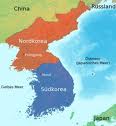
This article first published in July 2000 identifies the process whereby South Korean capitalism was literally hijacked at the height of the 1997-98 Asian Crisis. The objective was also to destabilize and its major business conglomerates as well as take over its banking system. The IMF reforms triggered a string of bankruptcies and the downfall of industrial wages.
The IMF program applied to a advanced market economy was to undermine national sovereignty as well as shunt the process of reunification of North and South Korea. The longer term objective is to open up North Korea to Western corporate capital as well as transform the DPRK into a new cheap labor frontier of the global economy. That was the fate of Vietnam starting in the early 1990s upon the lifting of US economic sanctions.
The deadly sanctions regime imposed on Pyongyang over a period of more than half a century combined with the relentless threat to wage a nuclear attack against North Korea are intended to eventually impose the “Free Market” on the DPRK Korea under the guidance of Wall Street and the IMF.
An expanded and updated version of this text was subsequently included in the second edition of my book, The Globalization of Poverty and the New World Order, Global Research, Montreal, 2003.
Michel Chossudovsky,
* * *
The Recolonization of Korea
Seoul Black Monday. IMF Intervention in Korea
by Michel Chossudovsky
June 10, 2000In the late days of November 1997 an IMF team of economists led by trouble-shooter Hubert Neiss was swiftly rushed to Seoul. Its mandate: to negotiate a Mexican-style bail-out with a view to rapidly restoring economic health and stability. An important precedent had been set: the IMF’s bitter economic medicine, routinely imposed on the Third World and Eastern Europe, was to be applied for the first time in an advanced industrial economy.
Washington had carefully set the stage in liaison with the US Embassy in Seoul. Barely a week before the arrival of the IMF mission, President Kim Young Sam had sacked his Finance Minister for having allegedly hindered negotiations with the IMF. A more acceptable individual was appointed on Washington’s instructions. Very convenient: the new negotiator and Finance Minister Mr. Lim Chang-yuel happened to be a former IMF and World Bank official. Also fired at short notice was presidential economic adviser Kim In-ho, for having spurned the IMF option and said Seoul would restore international credibility through its own efforts. (1)
Finance Minister Lim was accustomed to the Washington scene. No sooner had he been appointed, he was whisked off to Washington for negotiations with his former colleague IMF Deputy Managing Director Stanley Fischer.
Seoul Black Monday
The government’s dealings with the IMF had been a closely guarded State secret. On Friday 21st of November, the government officially announced that it would be seeking an IMF bailout. On the following business day, November 24th, Seoul Black Monday, the stock market crumbled to a ten year low over feared IMF austerity measures and expected corporate and bank collapses. Faithfully obeying orders from Washington, Finance Minister Lim had removed all exchange controls from the currency market with the result of enticing further speculative assaults against the won. (2)Two days later, November 26th, the IMF mission headed by Mr. Hubert Neiss arrived at Seoul’s Kimpo airport. And barely four days later on the 30th, the parties had already agreed on a Preliminary Agreement. The draft text had been prepared at IMF headquarters in Washington prior to the arrival of the mission. The policy solutions had already been decided in consultation with Wall Street and the US Treasury: no analysis or negotiation was deemed necessary.
Arm Twisting in the wake of the Presidential Race
But the deal was not yet wrapped up. The country was on the eve of a presidential election, and the front-runner opposition centre-left candidate Kim Dae jung remained firmly opposed to the IMF bailout agreement. He warned public opinion and accused the outgoing government of organising a massive sell-out of the Korean economy:’Foreign investors can freely buy our entire financial sector, including 26 banks, 27 securities firms, 12 insurance companies and 21 merchant banks, all of which are listed on the Korean Stock Exchange, for just 5.5 trillion won,’ that is, $3.7 billion. (3)
Political turnaround
Barely two weeks later, upon winning the presidential race, Kim Dae jung had become an unbending supporter of strong economic medicine:I will boldly open the market. I will make it so that foreign investors will invest with confidence; in a mass rally he confirmed his unbending support for the IMF Pain is necessary for reform and we should take this risk as opportunity. (4)Succumbing to political pressure, Kim Dae jung, a former dissident, political prisoner and starch opponent of the US backed military regimes of Park Chung Hee and Chun Doo Hwan, had caved in to Wall Street and Washington prior to his formal inauguration as the country’s democratically elected president. In fact Washington had demanded in no uncertain terms that all three candidates in the presidential race commit themselves to adopting the IMF programme.
Enforcing Enabling Legislation through Financial Blackmail
Kim Dae jung had also given a green light to the Korean parliament. A special session of the Legislature was held on the following day, December 23. The four main government motions concerning the IMF Agreement were adopted virtually without debate. (5) Enforced through financial blackmail, legislation had also been approved which stripped the Ministry of Economy and Finance and of its financial regulatory and supervisory functions. South Korea’s Parliament had been transformed into a rubber stamp. Meanwhile, Moody’s Investor Service, the Wall Street credit agency, acting on behalf of US banking interests, had rewarded Korea’s compliance by downgrading ratings for Korean government and corporate bonds, including those of 20 banks, to ’junk bond’ status. (5)Negotiating a $57 Billion Bailout: Timetable of the Heist
19 November 1997- 24 December 1997
19 November: Outgoing President Kim Young-sam fires Minister of Finance Kang Kyong-shik for hindering negotiations with the IMF. Kang is replaced by Mr. Lim Chang-yuel, a former Executive director of the IMF.
20 November: Finance Minister Lim is rushed off to Washington for talks with his former colleague, IMF Deputy Managing Director Stanley Fischer.
21 November: The Repulbic of Korea (ROK) government formally announces that it will be seeking an Agreement with the IMF. The New Finance Minister is put in charge of negotiations with the IMF.
24 November: Seoul Black Monday. The Seoul stock market crumbles to a ten year low over feared IMF austerity measures and expected corporate and bank collapses.
26 November: The IMF mission arrives in Seoul headed by Mr. Hubert Neiss.
27 November: Shrouded in secrecy, talks between the IMF mission and ROK government officials commence.
30 November: After four days of negotiations, the IMF and the Government agree on a Preliminary Agreement.
1 December: The draft agreement is submitted to the approval of the ROK Cabinet.
3 December: IMF Managing Director Michel Camdessus arrives in Seoul to wrap up the deal. US Undersecretary of the Treasury David Lipton in discussions with Camdessus states that the deal cannot be finalized unless all three presidential candidates give their support to the IMF bailout.
4 December: The final text of the Agreement is ratified by the IMF Executive Board which approves a stand by arrangement for 21 billion dollars out of a total package of 57 billion.
5 December: Presidential candidate Kim Dae-jung expresses his opposition to the IMF Agreement and warns public opinion on its devastating economic and social impacts.
18 December: Kim Dae-jung wins the Presidential election and immediately declares his unconditional support for the IMF programme
22 December: US Under-secretary of the Treasury David Lipton arrives in Seoul. Lipton demands Kim Dae Jung to agree to massive layoffs of workers.
23 December: A special session of the Legislature is called. The Legislature rubber stamps four key government motions regarding the IMF programme.
24 December: Wall Street bankers are called to an emergency meeting on Christmas Eve. At midnight, the IMF agrees to rush 10 billion dollars to Seoul to meet an avalanche of maturing short-term debts.
26 December: Boxing Day: President-elect Kim Dae jung commits himself to tough actions: Companies must freeze or slash wages. If that proves not enough, layoffs will be inevitable.
Wall Street Bankers meet on Christmas Eve
The Korean Legislature had met in emergency sessions on December 23. The final decision concerning the 57 billion dollar deal took place the following day, on Christmas Eve December 24th, after office hours in New York. Wall Street’s top financiers, from Chase Manhattan, Bank America, Citicorp and J. P. Morgan had been called in for a meeting at the Federal Reserve Bank of New York. Also at the Christmas Eve venue, were representatives of the big five New York merchant banks including Goldman Sachs, Lehman Brothers, Morgan Stanley and Salomon Smith Barney.(6)
And at midnight on Christmas Eve, upon receiving the green light from the banks, the IMF was allowed to rush 10 billion dollars to Seoul to meet the avalanche of maturing short-term debts. (7)
The coffers of Korea’s central Bank had been ransacked. Creditors and speculators were anxiously awaiting to collect the loot. The same institutions which had earlier speculated against the Korean won were cashing in on the IMF bailout money. It was a scam.
Dismantling the Chaebols
The IMF bailout had derogated Korea’s economic sovereignty, establishing a de facto colonial administration under a democratically elected president. It had plunged the country virtually overnight into a deep recession. The social impact was devastating. The standard of living collapsed; the IMF reforms depressed real wages and triggered massive unemployment.The devaluation of the won, together with the stock market meltdown, generated a deadly chain of bankruptcies affecting both financial and industrial enterprises. The hidden agenda was to destroy Korean capitalism. The IMF program contributed to fracturing the chaebols.
Chaebol’s are conglomerates of many companies clustered around one holding company. The parent company is usually controlled by one family. In 1988, the 40 top chaebol grouped a total of 671 separate companies. Hyundai and Daewoo are examples. They produce widely differing products, everything from cars to TV sets. Chaebols do not, and this is important, control banks. (What is a chaebol?, at http://megastories.com/seasia/skorea/chaebol/chaewhat.htm)The latter had been invited to establish strategic alliances with foreign firms meaning their eventual takeover and control by foreign capital. Acting directly on behalf of Wall Street, the IMF had demanded the dismantling of the Daewoo Group including the sell-off of the 12 so-called troubled Daewoo affiliate companies. Daewoo Motors was up for grabs. Korea’s entire auto parts industry was in crisis leading to mass layoffs and bankruptcies of auto-parts suppliers. (8)
Meanwhile, the creditors of Korea’s largest business empire, Hyundai, had demanded that group’s break-up. With the so-called spin off, meaning the fracture of Hyundai, foreign capital had been invited in to pick up the pieces, meaning Hyundai’s profitable car and ship building units,at good prices. Korea’s high tech, electronics and manufacturing economy was up for grabs. Western corporations had gone on a shopping spree, buying up industrial assets at rock-bottom prices. The devaluation of the won, combined with the slide of the Seoul stock market, had dramatically depressed the dollar value of Korean assets.
California and Texas Tycoons to the Rescue
America had come to the rescue of Korea’s ’troubled banks’. For a meager $454 million, a controlling share (51%) of Korea First Bank (KFB) was transferred to Newbridge Capital Ltd, a US outfit specializing in leveraged buyouts.(9) In one fell swoop, a California-based investment firm, with no visible prior experience in commercial banking, had gained control of one of Korea’s oldest banking institutions with 5,000 employees and a modern network of branch offices through out the country.Under the terms of its agreement with Newbridge, the ROK government had granted so-called put back options to KFB (Korea First Bank) which entitled the new owners to demand compensation for all losses stemming from non-performing loans made prior to the sale.
What this meant in practice was a total cash injection by the ROK government (in several installments) into the KFB of 17.3 trillion won, an amount equivalent to 35 times the price Newbridge Capital had paid the government in the first place. (10)
In a modern form of highway robbery, a totally fictitious investment of 454 million dollars by Newbridge had enabled the new owners to cash in on a 15.9 billion dollar government hand-out. Not bad! And behind this lucrative scam, the Wall Street underwriter Morgan Stanley Dean Witter was also cashing in on fat commissions from both the ROK government and the new American owners of KFB.
And how was the government going to finance this multi-billion dollar handout? Through lower wages, massive layoffs of public employees including teachers and health workers, drastic cuts in social programs as well as billions of dollars of borrowed money.
Financed by the Korean Treasury, the new Texan and Californian owners of KFB had become domestic creditors of Korea’s troubled business conglomerates. Without having risked a single dollar, they now had the power to shake up, downsize or close down entire branches of Korean industry as they see fit, including electronics, automobile production, heavy industry, semiconductors, etc. Most of the business takeover proposals and spin-offs of the chaebols required the direct consent of Western financial interests. The fate of the workers of the chaebols was also in the hands of the new American owners.
The ROK government had not only lost control over the privatization program, it had allowed the entire financial services industry to be broken into. Chase Manhattan had purchased a majority interest in Good Money Securities. Goldman Sachs’ had acquired control of Kookmin Bank while New York Life had taken over its insurance arm Kookmin Life.(11)
The wholesale privatization of major public utilities had also been demanded, including Korea Telecom and Korea Gas. Korea Electric Power Corporation (KEPCO) was to be broken down into several smaller electricity companies prior to being placed on the auction block. Pohang Iron & Steel Corp. (POSCO) was also to become fully privatized. A similar fate awaits Hanjung, the State owned Korea Heavy Industries and Construction Company, slated to enter into a strategic alliance with Westinghouse.
Instating a System of Direct Colonial Rule
The system of indirect colonial rule first instated by the US Military under President Sygman Rhee in 1945 had been disbanded. Korea’s ruling business elites had been crushed. An entirely new system of government under President Kim Dae Jung had been established, geared towards the fracture of the chaebols and the dismantling of Korean capitalism. In other words, the signing of the IMF bailout Agreement in December 1997 marks an important and significant transformation in the structure of the Korean State. It also marks a decisive step in inter-Korean relations and Washington’s design to extend the free market to the entire Korean Peninsula.Reunification and the Free Market
An IMF negotiating mission was rushed to Seoul in early June 2000, barely a few days before the historic inter-Korean Summit in Pyongyang between President Kim Dae jung and Democratic People’s Republic of Korea (DPRK) Chairman Kim Jong il. Careful timing. The IMF’s presence in Seoul was barely noticed by the Korean press. Firmly behind Kim Dae jung, South Koreans had their eyes riveted on the promise of the country’s reunification. Other political issues were shoved to the sidelineMeanwhile backstage, removed from the heat of public debate, the IMF team was quietly putting the finishing touches on a new IMF Agreement to be duly signed by Finance Minister Lee Hun-jai, prior to his departure for the Pyongyang Summit.
It was a carefully planned sell-out: the June 2000 Agreement was more deadly than the first one signed in December 1997. In it, the ROK government renewed the IMF’s stranglehold on the Korean economy until 2003 without the occurence of any form of public debate or discussion. The dismantling and fracturing of South Korean capitalism was carefully outlined, to occur over a three year period, from 2000 to 2003. (12)
But the IMF mission had something else up its sleeve. In liaison with the US Embassy, the IMF mission briefed Finance Minister Lee Hun-jai, who was in charge of the Pyongyang Summit’s economic cooperation agenda. Lee was a faithful crony of the IMF. Prior to assuming the position of Finance Minister, he was in charge of the infamous Financial Supervisory Commission (FSC), the powerful IMF sponsored Watch Dog, responsible for triggering the bankruptcy of the chaebols.
Carefully briefed before his departure for Pyongyang, Finance Minister Lee was to uphold American business interests under the disguise of inter-Korean economic cooperation. Washington’s hidden agenda under the reunification process is the eventual recolonization of the entire Korean peninsula.
Colonizing North Korea
Under the inter-Korean economic cooperation program signed in Pyongyang, the Seoul government committed itself to investing in the North Korea. Hyundai, Korea’s largest conglomerate, was to invest and build factories in the North.But the Korean chaebols, including Hyundai, are rapidly being taken over by American companies. In other words, inter-Korean economic cooperation may turn out to be a disguised form of foreign investment and a new window of opportunity for Wall Street. The new American owners of the chaebols in consultation with the US State Department will ultimately be calling the shots on inter-Korean economic cooperation including major investments in North Korea:
Kim Dae Jung’s strategy is to help Pyongyang with aid and development, tap its cheap labor and build goodwill and infrastructure that are also in South Korea’s interest Everyone has to keep up the pretense that nothing will happen to the North Korean regime, that you can open up and keep your power and we’ll help you make deals with the International Monetary Fund and World Bank… But ultimately, we hope it does undermine them. It’s the Trojan horse. (13)The government of Nobel Peace Laureate President Kim Dae jung had set the stage on behalf of Washington. With US military might in the background, the promise of reunification, to which all Koreans aspire, could lead to the imposition of so-called free market reforms on Communist North Korea, a process which would result in the recolonization and impoverishment of the entire Korean peninsula under the dominion of American capital.
Notes
1.Agence France Presse , 19 November 1997.2. Willis Witter, Economic Chief sacked in South Korean Debt Crisis; Emergency measures are introduced, Washington Times, 20 November 1997. See also International Monetary Fund, Korea: Request for IMF Standby, includes Letter of Intent and Memorandum on the Economic Programme, see para. 32, p. 44. The text can be consulted at http://www.chosun.com/feature/imfreport.html. Also quoted in Michael Hudson, Draft for Our World, Our World, Kyoto, 23 December 1997.
3. National Public Radio, 19 December 1997.
4. John Burton, Korea bonds reduced to junk status, Financial Times, London, 23 December 1997. P. 3.
5. Financial Times, 27-28 December 1997, p. 3.
6. Agence France Presse, Paris, 26 December 1997.
7. Autoparts makers step up resistance to Foreign Control of Daewoo Motor, Korea Herald, 28, June 2000.
8. See Michael Zielenziger, A rebounding but unreformed South Korea making investors, officials nervous, Knight Ridder Tribune News Service, 11 June 1999
9. More Tax Money for KFB, Korea Herald, Seoul, 17 August 2000, p. 1
10 Ibid
11. Struggle to survive will intensify amid M&As, Business Korea, Vol 17, No 2, February 2000, p. 30-36.
12. Text of Memorandum of Economic and Financial Policies and Letter of Intent, June 14, Ministry of Finance, Seoul, 2000, published in the Republic of Korea Economic Bulletin, June 2000 at http://epic.kdi.re.kr/home/ecobul/indexlist.htm. Also published by the International Monetary Fund (IMF) at http://www.imf.org/external/NP/LOI/2000/kor/01/INDEX.HTM. The Memorandum grants management rights to Deutsche Bank over KFB.
13 Los Angeles Times, June 16, 2000
Source: http://www.globalresearch.ca/the-recolonization-of-korea/719
Thursday, April 4, 2013
Friday, March 29, 2013
Public Banking Needed to Stop "Cannibalization" of the Economy
Michael Hudson: As long as finance is left in private hands, you're going to have austerity and America ending up looking like Greece and Ireland
Monday, March 25, 2013
Monday, March 18, 2013
"Everyone But China" Agreement Prevents Regulation of Hot Money and Speculation
Kevin Gallagher: The TPP, an everyone but China agreement, would make it illegal for countries to regulate the flow of hot money and speculation.
Time for China to punish US Client States in Asia by restricting access to Chinese market for those that have sold out their countries national interests to access US market at any price including Vietnam.
Sunday, March 17, 2013
Banks, Gold and Guns
David L. Smith of Geneva Business Insider.blogspot.com joins us for our monthly discussion on economics, finance and politics.
This month we cover the fudging of the Basel III accords, the state of the Swiss central bank and other central banks around the world in 2013.
Sunday, February 24, 2013
Clinton's Policy of Not Prosecuting Bank Fraud Continues
Bill Black: Clinton admin. thought that prosecuting big bank fraud wasn't worth the governments time and could destabilize banking system - Obama continues the policy today
Thursday, February 21, 2013
Sunday, February 17, 2013
Monday, February 11, 2013
Sunday, January 27, 2013
Breaking Up the Big Banks is Not a Solution
Leo Panitch: Global capitalism needs massive banks, but big private banks have the power to prevent regulation and threaten more crisis; the solution is not breaking them up but making them public
Saturday, January 26, 2013
UK heads for triple dip as Economy shrinks
Political Economy Research does not agree with right wing prescriptions to UK economic problems of Mark Littlewood of the Institute of Economic affairs a think tank proponent of more savage cuts.
